
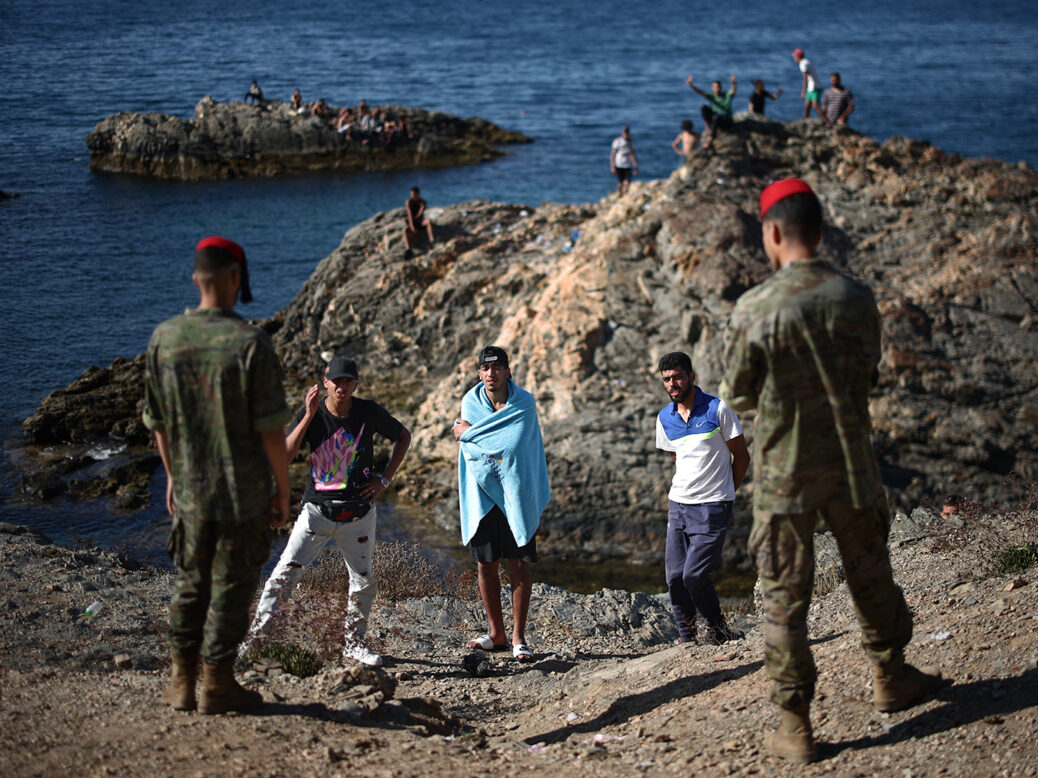
The border between Ceuta and Morocco is one of the most fortified in the world – analogous to the heavily armed borders that crossed Europe and Asia during the Cold War. The Iron Curtain is gone, but the walls on our borders have grown higher and more numerous. According to the Migration Policy Institute, fewer than a dozen border walls existed at the Cold War’s close; by 2022, there were 74. The Berlin Wall stood 3.6 metres high; the Ceuta fence stands 6. Globalisation is over – a death mourned by some, applauded by others. But the new walls signal a different emotion: fear. Increasingly, geographical neighbours – Russia and Ukraine, the United States and Mexico, Morocco and Spain – see each other as threats. This perception does not come from ideological rivalry or strategic competition, as it did in the Cold War, but from diminishing growth, shrinking horizons, the sense of a crumbling pie divided among too many.
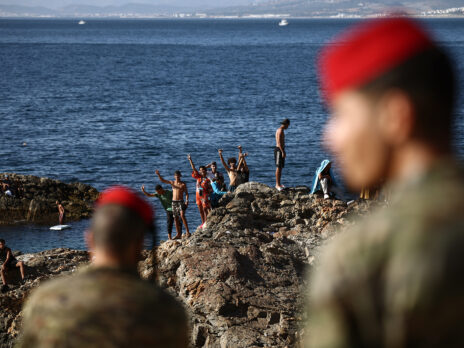
Walls articulate fear but do not guarantee security. On 30-31 July, between 50,000 and 60,000 unarmed men walked and swam a few hundred metres around the wall of Ceuta – this route, it turned out, was unprotected. It was the biggest single-day breach of a fortified border since East Germans swarmed the Berlin Wall on 9 November 1989. I visited Berlin a few months after that night, and I remember the cheerful crowds moving back and forth through the rough openings in the concrete. The shelves were empty, the currency was worthless, and the whole country – German “Democratic Republic” – understood it had reached a dead end. The future was uncertain and the past, hated. The present was, incredibly, full of hope.
Both breaches, in Berlin and in Ceuta, were driven by the huge difference in the quality of life on the two sides of the wall. And in both, the despair and impatience of ordinary people were accompanied by the organised efforts of states, whose agencies – intelligence, police and others – arranged the events, re-arranged them, and shaped their perception. The fall of the Berlin Wall was celebrated as a great victory of democracy, an irreversible event that changed the fate of Europe. The breach of Ceuta ended with sixty-seven people dead and everyone else returned to Morocco within days. In the furious debates that followed, these people have attracted the least attention. This vast all-male, unarmed, strangely obedient crowd – were they convinced rebels or recruited extras? What kind of life have they gone back to?
In the diplomatic row that followed, major European countries first condemned Spain’s actions, then approved them. In the spirit of hyperpolitics, we have all been shocked by an event that failed to happen: no one stormed Europe, no one got into Spain, and within days the border looked as it had before. Still, the soul-searching is justified, even if it will not be consequential. Like music to a ballet, fake news accompanied the breach from beginning to end. The Spanish decision to regularise half a million undocumented migrants was followed by a far-right claim that Spain was opening its borders. The bloggers who whipped up the wave on X and TikTok forgot to mention that getting from Ceuta to mainland Spain is no easier than getting from Rabat to London. I am positive that most Moroccans know that Ceuta is not part of Schengen, and that swimming around its wall would not bring them to Europe.

Yet the Moroccan authorities facilitated the massive preparations for the breach, which included many buses delivering thousands of people to the border. Moroccan security agents, reported among the swimmers, had identified the Achilles heel of the Ceuta Wall – its absence in the waters around it. Someone will have to explain why the decision to float a barrier off the Tarajal breakwater was taken after the breach rather than before it. The wall fell to a hybrid action that combined public disinformation with a special operation exploiting the negligence of the defenders. This is how walls have been breached since the Trojan War.
Geopolitics was as relevant as ever. Morocco is a strategic ally of Israel; Spain is a vocal opponent of the war in Iran. Two weeks before the breach, the US House passed a bill whose committee report described Ceuta and Melilla as “located in Moroccan territory” and endorsed talks on their future status. Kirill Dmitriev, the Russian special envoy, posted a photograph from the Ceuta beach next to Thomas Cole’s painting, “Destruction of Rome”. More directly, Donald Trump blamed Spain’s “weak, very liberal laws”, called Spain “a terrible partner”, and ordered cuts to US trade with the country.
In fact, Spain is the last country in Europe that deserves the economics lecture. It records a robust GDP growth of 2.8 per cent, vastly outpacing Germany, France, Italy and the UK; Goldman Sachs expects it to keep growing three times faster than the euro area’s forecast 0.7 per cent. Employment is at an all-time high, productivity rises faster than among its European peers, and Spain is hailed as a “shining light” of the clean energy transition. Growth – the most conventional indicator of success that Europe knows – needs labour, and migration has been a key factor sustaining it. Spain is not an outlier in generosity, either: as Pedro Sánchez wrote in his response to the protest letter of 22 EU leaders, Germany, Poland and Italy host more registered refugees per capita than Spain does. The country under attack for its migration policy is the country that made migration work.
There is, however, a subtle difference that helps explain the fury of this debate. Per capita, Poland, Germany and Finland have taken in far more Ukrainian refugees, while Spain, France and Italy receive relatively more African migrants. The Ukrainians count more women than men; they ask for temporary protection rather than permanent residence; they find their place in the economy quickly. Above all, the war explains their flight in a way that everyone accepts. The famines, droughts and unemployment that push Africans north are treated as no explanation at all, as if a threat to life had to arrive by missile to be legitimate. Europe, in effect, runs two migration systems. The northern half of the continent hosts refugees who look like neighbours in trouble; the southern half hosts migrants who look, to the far right, like the “Great Replacement” in progress – a theory that nearly half of Republican voters now accept. The images from Ceuta were a gift to them. They show little sympathy for the Ukrainians either – they just cannot say why. The reasons, it turns out, were never the point.
Engineering a migrant crisis amidst an unprecedented heat wave and two major wars sends global political legitimacy to new lows. Not for the first time, climate politics and peace efforts have been taken hostage by a racialised migration angst. This is precisely why anti-migration arguments matter so much to the far right: they distract from the defining issues of our time – climate and war. It is regrettable, to say the least, that Europe’s risk-averse, growth-seeking, climate-aware leaders appear to accept these arguments in a moment of panic. The walls will keep rising; the Migration Policy Institute will keep counting. But when people breached the wall in Berlin, we called it freedom. When they breach the wall in Ceuta, we call it a catastrophe. The difference is not in the people climbing. It is in what waits for them on the other side – and in what we have stopped believing about ourselves.
[Further reading: Europe’s shame]
Content from our partners



Related

Join the debate
Subscribe here to comment